
Wondering why your electric bill is so high? Go ask AI about data centers
Your electric bill has been going up. You may have just noticed recently, or you may have been tracking the increases over years, but one thing is for sure: Electricity is getting noticeably more expensive.
What’s more, U.S. residential electricity rates have risen significantly faster than commercial and data center rates in recent years. This means that households (aka, “we”) are increasingly subsidizing the electricity costs of AI infrastructure.
Of course, with any market as complex as the energy market, there are many causes for this rise. But here’s one that’s become increasingly top of mind: data centers. We’ve all heard of the AI boom and how we need more and more data centers to keep up. Well, the thing about data centers is that they use a lot of electricity (and water, it turns out).
No sweat, right? They use the electricity, they pay for it. Well… it’s not quite that simple. According to a recent analysis by Yale Climate Connections, the price that commercial and data centers are charged for electricity has started falling, even while they are driving more electricity demand than ever.
It used to be that rates for individuals, commercial and data centers, and industry all rose at about the same rate. But, as Yale Climate Connections shows, that recently changed.
Let’s look at a couple charts.
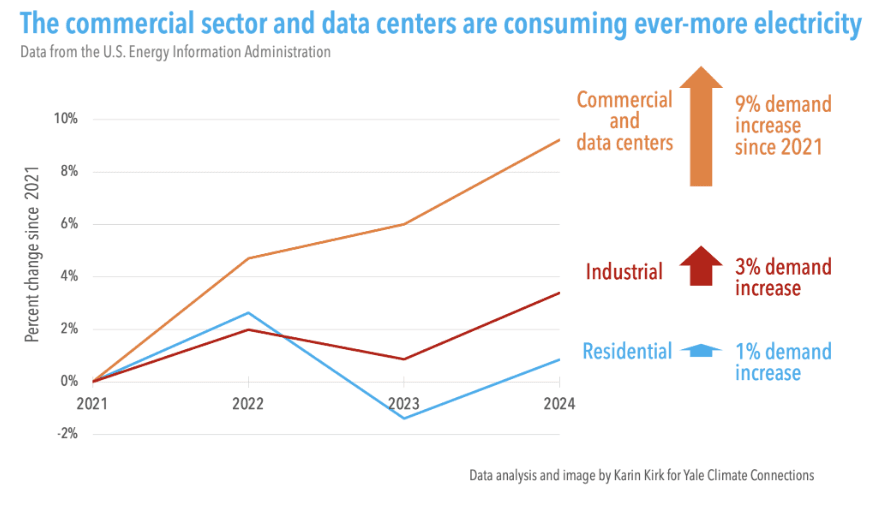
We can see that even though commercial and data centers are responsible for a lot of the demand growth for electricity…
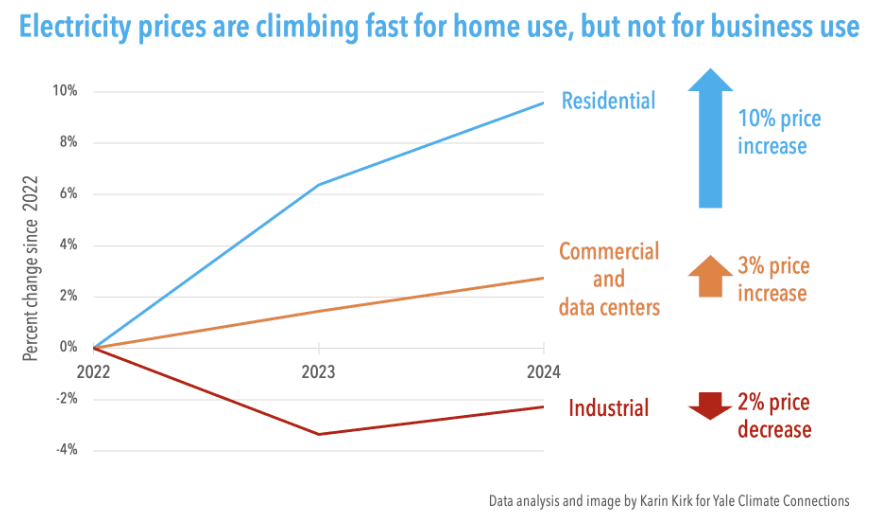
That’s right, as data centers consume more electricity, their rates are basically staying the same. Our rates? Hmmm, that doesn’t feel right.
The next question is…
What can you do about it?
After getting just the right amount of angry about this, there are a few things you can do to help stem the tide.
Make your voice be heard
Utility rates are largely set by public utilities commissions. Some of these commissions are elected, some are appointed, but all of them have a way for consumers to provide feedback. Now, you won’t be surprised to hear that it’s not always easy to provide that feedback, but it is possible. And it can help.
This beginner’s guide to public utility commissions from Canary Media is a great place to start.
Time-of-use awareness
If your utility offers a time-of-use rate plan, understanding when electricity is cheapest — typically overnight and on weekends — can help reduce your bill even without solar. Running high-consumption appliances like dishwashers, washing machines, and EV chargers during off-peak hours can meaningfully lower your monthly costs.
Get solar!
Well, you had to see this one coming. Maybe the best way to fight against higher electric rates is to use less electricity from the grid. After all, the Sun has been providing free energy for billions of years, and isn’t stopping anytime soon. And the more solar energy you use, the less you rely on the power company.
While solar won’t work for everyone, there are now so many ways to finance solar that there’s a good chance you’ll be able to get a system that helps cut your energy bills significantly. And the economic benefits only increase as utility rates do.
Interested, but not sure how to get started? That’s a common problem. It can be tough to cut through all the noise to find a trustworthy installer.
Our free (don’t even have to enter an email) Homeowner Guide to Going Solar has a bunch of tips on what to look for, addresses the most common concerns, and answers the most FAQs.
Frequently asked questions
Q: Why is my electric bill so high?
Electricity bills have been rising for several reasons: including increased demand from AI data centers, aging grid infrastructure, higher fuel costs, and climate-related weather events that strain the grid. While data centers are consuming record amounts of electricity, residential rates have risen faster than commercial rates, meaning homeowners are bearing a disproportionate share of the cost increases.
Q: Are AI data centers causing higher electricity bills?
Research from Yale Climate Connections shows that as data centers drive unprecedented growth in electricity demand, their rates have remained relatively flat while residential rates have climbed. The result is that homeowners are effectively subsidizing a portion of the electricity costs of AI infrastructure, a dynamic that is drawing increasing scrutiny from consumer advocates and utility regulators.
Q: What can I do to lower my electric bill?
There are a few practical steps: contact your public utilities commission to make your voice heard on rate structures, shift high-consumption appliances to off-peak hours if your utility offers time-of-use pricing, and consider solar, which reduces how much electricity you draw from the grid and insulates you from future rate increases. The more solar energy you generate yourself, the less exposed you are to rising utility costs.
Q: Can solar protect me from rising electricity rates?
Yes — one of the most compelling financial arguments for solar is that it reduces your dependence on grid electricity, shielding you from rate increases over time. As utility rates rise, the value of the electricity your solar panels generate increases proportionally, improving your return on investment the longer you have the system.