How much power does a solar panel produce?
So, you’re considering solar. You probably have a bunch of questions, from basic (“What’s a kilowatt-hour?”), to more complex (“How should I finance my system?”). One of the first questions you’re probably wondering about is how much actual electricity does a solar panel produce and where does that power go?
These may seem like simple questions, but getting this foundation will help you figure out what you need when you start working with an installer.
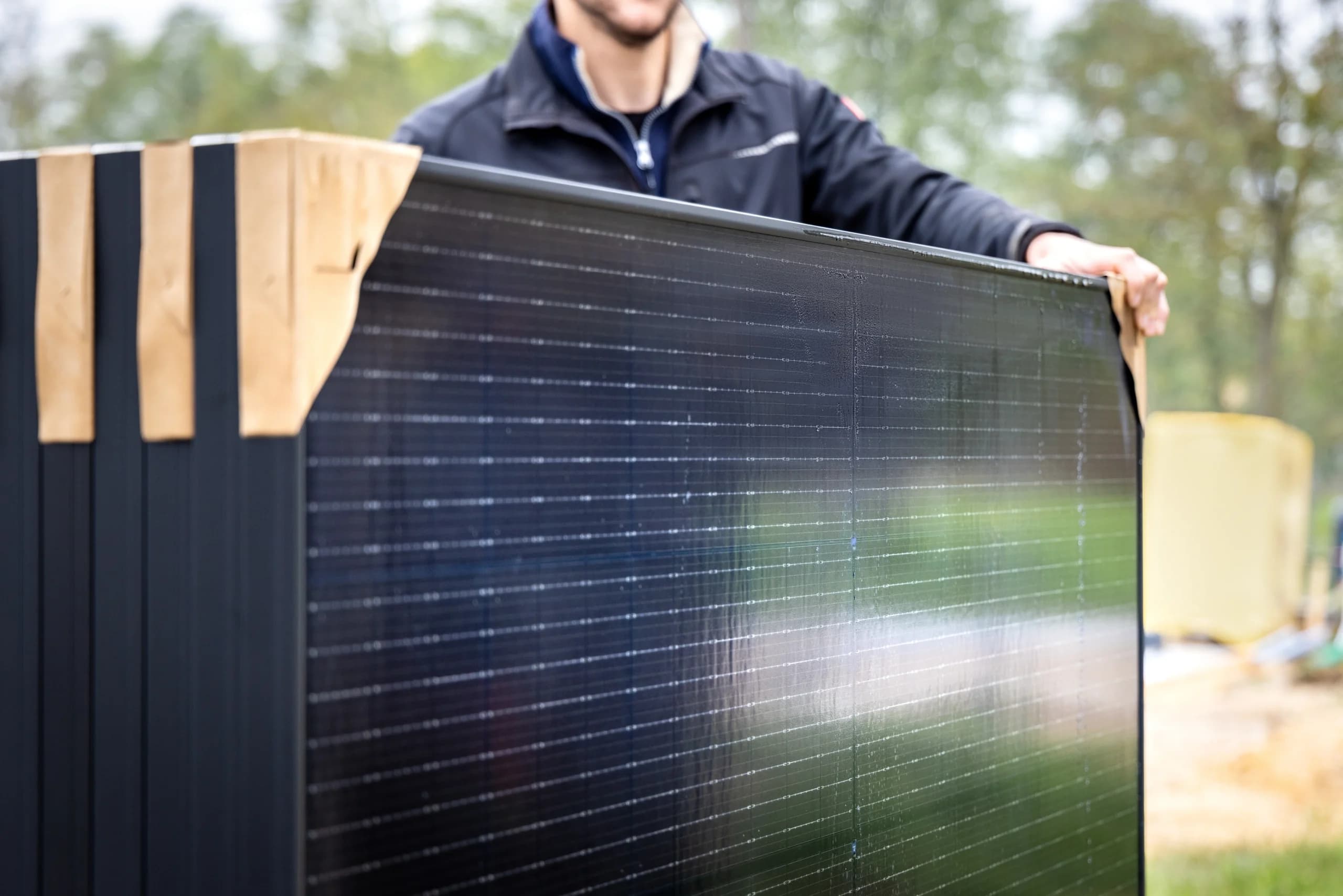
You’ll find a lot of articles online that tell you the average solar panel has a capacity of 250-400 watts — i.e. it would produce between .25 and .40 kilowatt-hours of electricity per hour of direct sunlight. In practice, though, the vast majority of panels available now have a capacity of somewhere between 400 and 460 watts.
Let’s get into more detail about the average amount of power a solar panel produces, how to calculate the rate of power production per panel, and the factors that affect your solar installation’s output.
In this article:
- How solar panels work
- How solar power production is measured
- Average solar panel production
- Factors affecting solar panel power capacity
- Maximizing solar panel power production
- Frequently asked questions
How solar panels work
Perhaps you’ve heard that solar panels convert sunlight into electricity? They do this via the photovoltaic (PV) effect and the photovoltaic cells that the solar panels are made up of. This is why you’ll often hear solar referred to as a, “PV installation,” “PV panels,” and so on. When sunlight shines on these panels, photons knock into electrons in the silicon PV cells, releasing electrons. As these electrons flow from the negative to the positive side of the PV cells an electric current is generated. It’s pretty wild when you think about it.
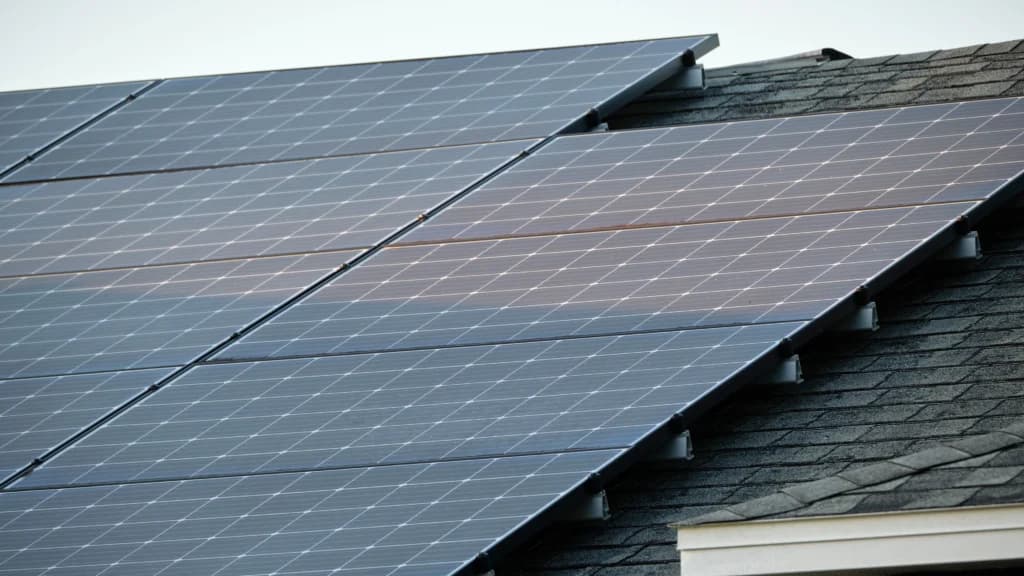
This current flows through the wiring in the system to your inverter — there are often microinverters on each panel, or you can have a main inverter that covers several panels — where it’s converted from direct current (DC) into alternating current (AC) that you can use in your home.
How solar panel power production is measured
Panel output is rated in watts (W) under Standard Test Conditions (STC) — basically a certain amount of light, a specific temperature, and atmospheric pressure. These conditions are basically optimal for production. The actual energy production you get from a panel is measured in watt-hours (Wh) or kilowatt-hours (kWh) and depends on sunlight (“peak sun hours”), temperature, and system losses.
A quick thing to remember is that watts and kilowatts measure capacity — how much energy a panel can produce at a given time. Watt-hours and kilowatt-hours measure actual electricity production — how much energy a panel actually produced in a given time.
Average solar panel production
A good estimate to start with is that modern solar panels produce 400 watts of power under direct sunlight. So, if you get 4.5 hours of peak sunlight per day, you can expect each panel to generate roughly 1,800 watt-hours (or 1.8 kWh) of electricity per day. However, solar production varies greatly.
You can follow this formula to determine the estimated total solar panel output a system can generate:
Wattage x Average Direct Sunlight Hours = Watt-hours Per Day
Even with the most accurate calculations, this value will fluctuate based on your area’s weather conditions, where the panels are installed, and the state and cleanliness of your panels.
Factors affecting solar panel power capacity
Many factors affect your solar system’s output and subsequent capacity — knowing what they are can help you maximize your setup and savings.
Size and type of solar panel
Different solar panels (and sizes of solar systems) offer varying energy production levels, even if placed in the same conditions. To see what this looks like, we have to consider the three primary types of panels and their differences:
- Monocrystalline panels: Made from single-crystal silicon, these panels deliver the highest efficiency and the best temperature performance. They require the least roof space per watt but typically carry the highest price tag.
- Polycrystalline panels: Cast from multiple silicon fragments, poly panels cost less than mono but are slightly less efficient and require more roof space. They work well in moderate climates (they are more sensitive to heat) and offer a strong balance of performance and value.
- Thin-film solar panels: Built from layers of semiconductor materials (like cadmium telluride), thin-film panels are lightweight, flexible, and affordable. They are extremely uncommon in residential solar.
Geographic location and sunlight exposure
While it may seem like common sense, it’s important to remember that solar panels need sunlight to convert energy to power. Because sunlight varies by region and season, an installer will use an irradiance map — or will use solar design software with irradiance included — to pinpoint your site’s solar potential before sizing your system or placing panels. Armed with that data, they can optimize your panel orientation, tilt, and layout to capture the most energy throughout the year.

Weather conditions
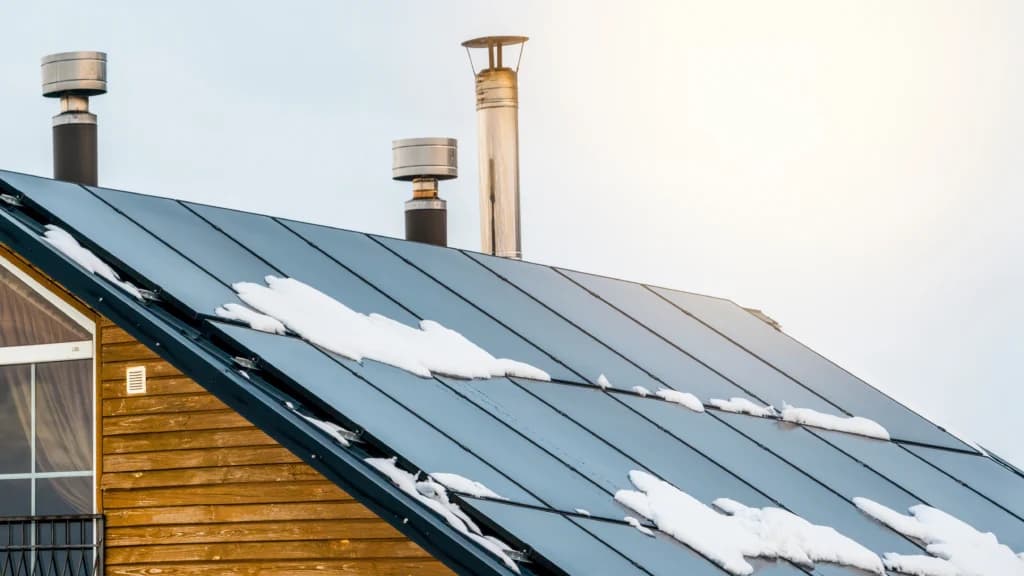
The local climate also plays a major role in how much power a solar system can produce at a given time. For example, if you live in a cloudy area you’ll probably have different irradiance potential than those who live in sunnier areas, such as the desert. Additionally, those living in excessively hot areas may see their conversion efficiency decrease — solar panels are more efficient in cooler weather — resulting in less power produced overall.
Angle and orientation of installation
The angle and orientation of your panels matter when it comes to generating energy. The more directly the sunlight hits a panel, the more electricity that panel can produce. So, the pitch of your roof and the angle the panels are installed at affect the amount of power a system can produce. If you look at some commercial solar installs you’ll see that some systems have little motors to keep the panels facing the sun throughout the day.
Your solar installer will consider many factors to ensure the best possible panel placement, including the latitude, longitude, and orientation of your home, and shaded areas adjoining your house.
Maximizing solar panel power production
The job isn’t done once the system is designed to generate the most power possible given all the factors we discussed above. To get the most energy (and savings) from your solar system, proactive maintenance, smart monitoring, and even storage can help. Small optimizations add up. Here are the top steps to boost your system’s output while prolonging the life of your panels.
Regular maintenance and cleaning
Cleaning home solar panels is typically minimal since they’re often rinsed off by rain. However, there are times when solar panels should be cleaned. This can help increase the total energy produced by your system and help it last longer. It’s important to note, though, that you shouldn’t just get up on your roof and do it yourself. Contact an expert and get it done right. You don’t want to damage your panels — or yourself.
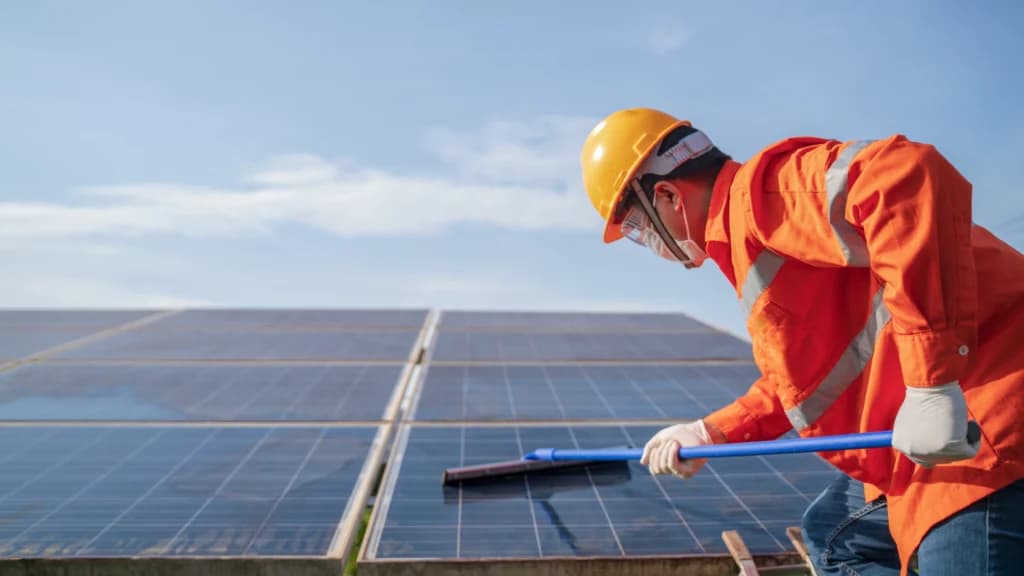
Where you live affects how often your solar panels may need cleaning. While many homeowners opt for once a year, if you live in the desert, on the coastline, or in the city, you may find you need to clean your panels more often due to dust and grime buildup.
Conversely, if you live in an area with a lot of rain or your panels are at a steeper angle, you may find that you don’t need to clean your panels as often — or at all.
Technology upgrades and enhancements
Your solar monitoring app will help you see how much energy your system is generating, and can even show you how much you’re using, how much you’re sending to the battery, and so on. It’s important to keep this app updated to the latest version so you have the best possible information.
You might also want to check in with your installer, follow your panel and inverter manufacturers’ release notes, and subscribe to solar industry updates to keep up to date.
Energy storage solutions
Energy storage solutions — aka home batteries — can be a great way to maximize your power output and utility over time. These systems store energy from your panels to keep the lights on in the event of an outage, or even to send back to the grid when prices are high.
Learn more about solar panels for your home
Wondering how much a home solar system might look like for you? Check out our marketplace.
Frequently asked questions
How many solar panels does it take to power a house?
Honestly, it totally depends on the size of your home and how much electricity you use. It also depends on the capacity of the panels you choose, your access to sunlight. So, there’s really no easy answer here. For a “typical” American home in a “typical” climate, 15-25 panels can generally cover 100% of your use. You can get a more exact calculation with just your ZIP code here.
What can you power with a single solar panel?
A single solar panel can typically power a few small devices. Larger appliances require multiple panels or battery storage. But, nobody would just install one solar panel on their roof. This is just a way to illustrate how much energy a single panel produces.
What are the highest efficiency solar panels?
As of this writing, the highest efficiency solar panels on the market are in the 430-470-watt range.